
The U.S. visa application process for Indian travellers has seen a major improvement in wait times in recent months. According to the latest reports, including a Times of India article published in December 2025, interview wait times for several U.S. visa categories — especially student and exchange visas — have dropped sharply compared to earlier in the year.
This update brings relief to Indian students, tourists, professionals, and business travellers who were earlier facing wait periods of 6 to 12 months.
In this blog, we cover the latest U.S. visa wait times for Indians, including all major visa types and city-wise data across India, based on the most recent publicly available information.
Eduprofound is a trusted U.S. immigration consultancy in India, offering expert guidance for student, tourist, and work visas. We help applicants navigate documentation, appointments, and interviews with up-to-date insights—ensuring a smooth, confident visa journey.
What Does “U.S. Visa Wait Time” Mean?
U.S. visa wait time refers to the estimated number of days or months until the next available interview appointment at a U.S. Embassy or Consulate.
It does not include
- Administrative processing after the interview
- Passport delivery time
Wait times vary depending on
- Visa category
- City of application
- Seasonal demand
- Staffing and policy changes
Latest Update: U.S. Visa Wait Times for Indians Have Reduced
As per the Times of India (December 2025), U.S. visa wait times in India have dropped significantly, especially for:
- Student visas (F-1, M-1, J-1)
- Exchange and academic categories
- Some business and tourist visas (B-1/B-2)
However, wait times are still longer for tourist visas compared to student and work visas.
City-wise U.S. Visa Wait Times in India (December 2025)
| Visa Type | Approximate Wait Time |
|---|---|
| Tourist / Business (B-1/B-2) | 2.5 – 3.5 months |
| Student / Exchange (F, M, J) | 15 – 30 days |
| Work / Petition-Based (H, L, O, P, Q) | Short / Limited slots |
| Transit / Crew (C/D) | Less than 2 weeks |
New Delhi has shown one of the biggest improvements in wait times.
| Visa Type | Approximate Wait Time |
|---|---|
| Tourist / Business (B-1/B-2) | 6 – 7 months |
| Student / Exchange (F, M, J) | 2 – 3 months |
| Work / Petition-Based | Around 1 month |
| Transit / Crew (C/D) | Less than 2 weeks |
Mumbai still has one of the longest times for B-1/B-2 visas.
| Visa Type | Approximate Wait Time |
|---|---|
| Tourist / Business (B-1/B-2) | 3 – 4 months |
| Student / Exchange (F, M, J) | 1.5 – 2 months |
| Work / Petition-Based | 2 – 3 months |
| Transit / Crew (C/D) | Less than 2 weeks |
Hyderabad remains a relatively faster option for many applicants.
| Visa Type | Approximate Wait Time |
|---|---|
| Tourist / Business (B-1/B-2) | N/A or fluctuating |
| Student / Exchange (F, M, J) | Short / frequently updated |
| Work / Petition-Based | Short wait periods |
| Transit / Crew (C/D) | Less than 2 weeks |
“N/A” usually means slots are being refreshed or reallocated.
| Visa Type | Approximate Wait Time |
|---|---|
| Tourist / Business (B-1/B-2) | 2 months |
| Student / Exchange (F, M, J) | 2 – 2.5 months |
| Work / Petition-Based | Varies |
| Transit / Crew (C/D) | Less than 2 weeks |
Kolkata often shows moderate wait times compared to other cities.
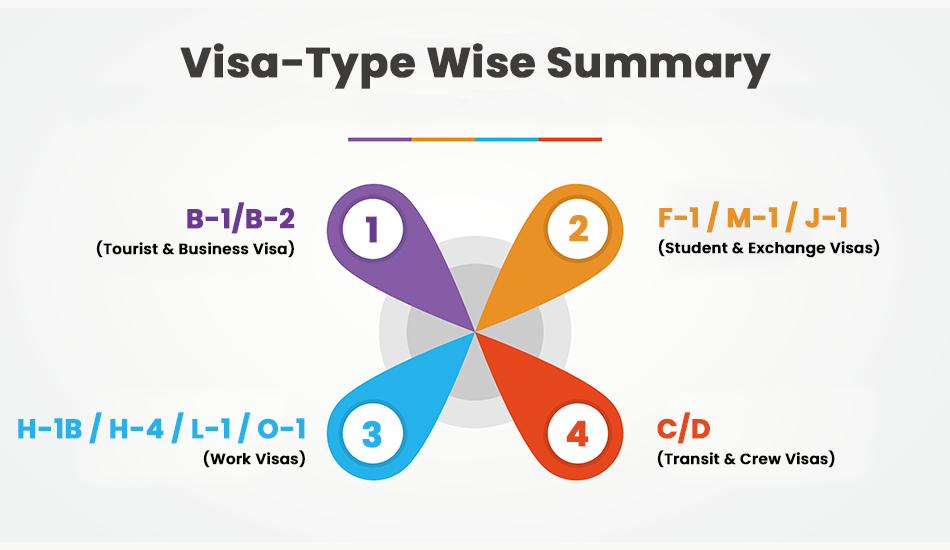
Visa-Type Wise Summary
B-1/B-2 (Tourist & Business Visa)
- Still the longest waiting category
- Improved compared to early 2025
- Average: 3–7 months, depending on city
F-1 / M-1 / J-1 (Student & Exchange Visas)
- Fastest improvement
- In some cities, wait times reduced to 2–4 weeks
- Priority given during academic intake seasons
H-1B / H-4 / L-1 / O-1 (Work Visas)
- Official wait times appear short
- Actual appointments may be affected by rescheduling and enhanced vetting
- Some cases pushed into early 2026
C/D (Transit & Crew Visas)
- Consistently short wait times
- Usually under 2 weeks
What U.S. Visa Applicants Should Do Next
With U.S. visa wait times for Indians improving, applicants should act strategically and promptly to make the most of the reduced delays. Here are the key steps every applicant should follow next.
1. Apply as Early as Possible
Even though wait times have reduced, demand remains high, especially for B-1/B-2 tourist visas. Early application increases your chances of securing an earlier interview slot before demand rises again.
2. Check Multiple Consulate Locations
Wait times vary significantly between New Delhi, Mumbai, Hyderabad, Chennai, and Kolkata. Applicants can often find earlier appointments by selecting a different city while booking.
You are allowed to attend the interview at any U.S. consulate in India, regardless of your city of residence.
3. Monitor Appointment Slots Regularly
New interview slots are released frequently and without notice. Checking the appointment portal multiple times a day can help you grab an earlier date through rescheduling.
4. Prepare Documents in Advance
Use the waiting period wisely by keeping all documents ready:
- Valid passport
- DS-160 confirmation page
- Visa fee receipt
- Appointment confirmation
- Supporting documents based on visa type (I-20, SEVIS receipt, petition approvals, financial proofs, etc.)
Being well-prepared avoids last-minute delays.
5. Avoid Last-Minute Travel Bookings
Applicants should not book non-refundable flights or hotels until the visa is approved. Interview availability and processing timelines can change unexpectedly.
6. Be Cautious While Rescheduling
Most applicants are allowed limited free reschedules. Repeated changes may lead to:
- Loss of the original slot
- Longer wait times
- Additional visa fees
Reschedule only when a clearly earlier date is available.
7. Students Should Prioritize Early Slots
Students applying for F-1, M-1, or J-1 visas should:
- Apply immediately after receiving their I-20
- Track slots closely during peak intake seasons
- Be ready for short-notice interview dates
8. Stay Updated With Official Sources
Visa wait times are dynamic. Applicants should regularly check:
- Official U.S. Embassy & Consulate announcements
- Trusted news sources for policy updates
9. Consider Professional Guidance (Optional)
Applicants unfamiliar with the process or applying under complex visa categories (work, dependents, repeat refusals) may benefit from expert guidance from a U.S. visa consultant to avoid errors and delays.
Final Advice for Applicants
While wait times have improved, visa approval still depends on eligibility and documentation, not speed alone. Careful planning, timely action, and accurate information remain the key to a successful U.S. visa application.
Why Have U.S. Visa Wait Times Reduced?
The recent reduction in U.S. visa wait times for Indian applicants is the result of multiple operational and policy-level improvements introduced by the U.S. government over the past year. While the situation has not fully normalised, these steps have helped ease long-standing backlogs.
1. Increased Staffing at Indian Consulates
One of the biggest reasons for shorter wait times is the addition of consular officers and support staff at U.S. embassies and consulates across India.
Higher staffing levels mean:
- More interview windows opened daily
- Faster document verification
- Improved handling of high application volumes
India remains one of the largest U.S. visa applicant markets, making staffing expansion a critical factor.
2. Better Appointment Slot Management
The U.S. Department of State has improved how interview slots are released and managed. This includes:
- Regular release of new appointment slots
- Dynamic rescheduling systems that reuse cancelled appointments
- City-wise redistribution of capacity based on demand
As a result, applicants are now seeing earlier available dates, especially in cities like New Delhi and Hyderabad.
3. Priority Processing for Students and Exchange Visitors
Student and exchange visas (F-1, M-1, J-1) are being prioritised, particularly during academic intake seasons.
This is because:
- U.S. universities rely heavily on international students
- Delays can impact admissions and academic calendars
- Student visas are considered time-sensitive
This prioritisation explains why student visa wait times have dropped sharply, in some cases to just a few weeks.
4. Clearance of Pandemic-Era Backlogs
During and after COVID-19, visa operations were severely disrupted, leading to multi-year appointment backlogs.
Over time, consulates have:
- Cleared pending applications from earlier years
- Reduced carryover demand from pandemic closures
- Stabilised appointment capacity compared to pre-pandemic levels
With older cases largely processed, newer applicants are now moving through the system faster.
5. Operational Improvements and Digital Processes
Behind the scenes, consulates have adopted:
- Improved scheduling software
- Streamlined interview workflows
- Better coordination between biometric and interview stages
These efficiency upgrades allow consulates to handle more applicants per day without compromising security checks.
Still, Demand Remains High — Especially for Tourist Visas
Despite these improvements, B-1/B-2 (tourist and business) visas continue to face heavy demand.
Reasons include:
- Strong post-pandemic travel interest
- Family visits, tourism, and business travel growth
- Limited prioritisation compared to student and work visas
This is why tourist visa wait times, although improved, remain longer than other categories in most Indian cities.

Final Advice from Eduprofound
While U.S. visa wait times for Indian applicants have improved significantly, successful visa outcomes still depend on timely action, accurate documentation, and informed decision-making. Reduced wait times should be seen as an opportunity, not a reason to delay your application.
At Eduprofound, we advise applicants to
- Apply as early as possible, even if travel plans are tentative
- Choose the right visa category and consulate based on current wait trends
- Prepare documents thoroughly to avoid refusals or administrative delays
- Stay updated with official announcements and appointment slot changes
For students, early visa planning is critical to avoid missing academic intakes. For tourists and business travellers, booking an interview well in advance remains essential due to consistently high demand.
Visa policies and wait times can change without notice. Professional guidance can help you navigate complexities, avoid costly mistakes, and improve overall readiness for your U.S. visa interview.
Eduprofound remains committed to guiding applicants with accurate information, transparent advice, and end-to-end visa support — helping you move forward with confidence.
How Eduprofound Helps U.S. Visa Applicants
Navigating the U.S. visa process can be complex, especially with frequently changing wait times, documentation rules, and interview requirements. Eduprofound supports applicants at every stage of the journey, ensuring clarity, accuracy, and confidence throughout the application process.
1. Personalized Visa Assessment
Eduprofound evaluates each applicant’s profile, travel purpose, academic background, or work history to recommend the most suitable U.S. visa category. This helps applicants avoid common mistakes such as applying under the wrong visa type.
2. End-to-End Application Guidance
From filling out the DS-160 form to booking visa appointments, Eduprofound provides step-by-step support to ensure:
- Accurate and error-free applications
- Correct selection of consulate locations
- Timely submission of required details
3. City & Slot Strategy to Reduce Waiting Time
Based on the latest visa wait time trends, Eduprofound advises applicants on:
- Choosing the best U.S. consulate in India
- Monitoring and securing earlier appointment slots
- Safe rescheduling strategies to avoid penalties
- This helps applicants minimise delays wherever possible.
4. Document Preparation & Verification
Eduprofound assists in preparing and reviewing all required documents, including:
- Financial proof
- Academic records (for students)
- Employment and business documents
- Supporting evidence tailored to visa type
Proper documentation reduces the risk of rejection or administrative processing.
5. Interview Preparation & Confidence Building
Visa interviews play a crucial role in approval decisions. Eduprofound provides:
- One-on-one mock interviews
- Common and visa-specific interview questions
- Guidance on how to present your case clearly and honestly
This helps applicants approach interviews with confidence.
6. Student-Focused Support
For F-1, M-1, and J-1 visa applicants, Eduprofound offers:
- University and course guidance
- I-20 and SEVIS fee assistance
- Intake-based visa planning to meet academic timelines
7. Post-Interview & Follow-Up Assistance
Eduprofound continues to support applicants even after the interview by:
- Guiding applicants through administrative processing, if required
- Assisting with passport tracking and next steps
- Advising on reapplication strategies in case of refusal
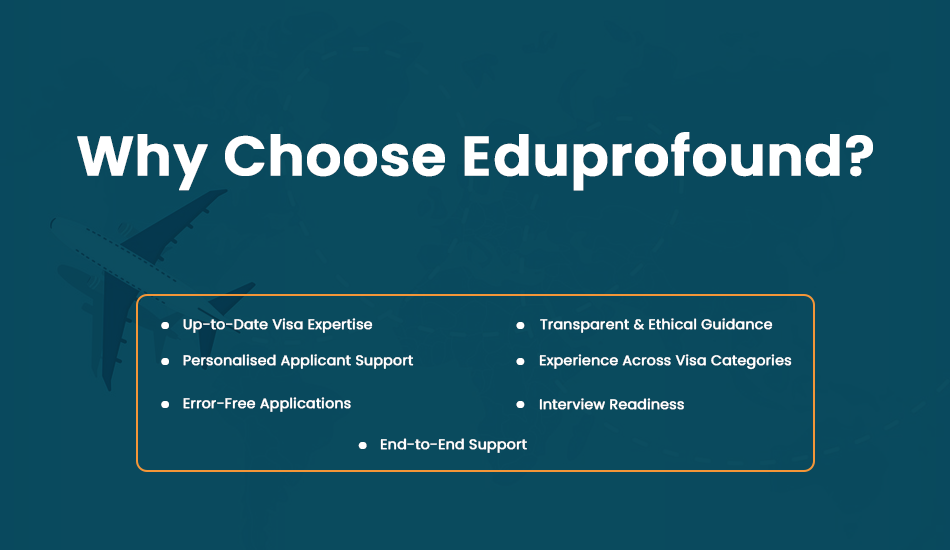
Why Choose Eduprofound?
Up-to-Date Visa Expertise
Eduprofound stays aligned with the latest U.S. visa policies, appointment trends, and embassy updates to provide accurate and reliable guidance.
Transparent & Ethical Guidance
We clearly explain eligibility, documentation, and timelines, helping applicants make informed decisions without false commitments or misleading promises.
Personalised Applicant Support
Every applicant receives tailored advice based on their visa category, background, and goals—never a one-size-fits-all approach.
Experience Across Visa Categories
Our team assists with student, tourist, business, and work visas, understanding the unique requirements of each category.
Error-Free Applications
Careful review of forms and documents helps minimise mistakes, reducing the risk of delays or refusals.
Interview Readiness
Structured interview preparation builds confidence and helps applicants present their case clearly.
End-to-End Support
From application to post-interview guidance, Eduprofound supports applicants at every step of the visa journey.
Frequently Asked Questions (FAQs) – U.S. Visa Wait Times for Indians
What is the current U.S. visa wait time for Indians?
U.S. visa wait times for Indians vary by visa type and city. As of December 2025, student visas may take a few weeks, while tourist visas can take several months depending on the consulate.
Why have U.S. visa wait times reduced recently?
Wait times have reduced due to increased staffing, better appointment management, priority processing for students, and clearance of pandemic-era backlogs.
Which U.S. visa has the shortest wait time in India?
Student and exchange visas (F-1, M-1, J-1) currently have the shortest wait times in most Indian cities.
Which U.S. consulate in India has the shortest visa wait time?
New Delhi and Hyderabad often show comparatively shorter wait times, especially for student visas.
Why is the B-1/B-2 tourist visa wait time still high?
Tourist and business visas face high demand due to travel, family visits, and business needs, and they are not prioritised like student visas.
Can I apply at any U.S. consulate in India?
Yes, Indian applicants can attend their visa interview at any U.S. embassy or consulate in India, regardless of residence.
How often are U.S. visa wait times updated?
The U.S. Department of State typically updates visa wait times monthly, but appointment availability can change daily.
What does “N/A” mean in U.S. visa wait times?
“N/A” usually indicates that appointment slots are being refreshed or temporarily unavailable, not that interviews are closed.
Do shorter wait times guarantee visa approval?
No. Visa approval depends on eligibility, documentation, and interview performance—not on wait time length.
Should I book flights before my U.S. visa interview?
No. Applicants are advised not to book non-refundable travel until the visa is approved.
Can visa wait times increase again?
Yes. Wait times can rise during peak travel seasons, academic intakes, or policy changes.
How can applicants reduce delays in the U.S. visa process?
Applying early, choosing the right consulate, preparing documents properly, and monitoring appointment slots regularly can help reduce delays.


